The capitalization rate — or cap rate — is the single most important number in NNN triple net property investing. It is the universal language of commercial real estate valuation, the primary metric buyers and sellers use to price NNN properties, and the first number any serious investor must understand before entering the market.
This guide explains cap rates from the ground up: what they are, how they are calculated, what drives them up or down, how they compare across tenant types and property categories, and how to use cap rates intelligently when evaluating NNN investment opportunities.
What Is a Cap Rate?
A capitalization rate expresses the relationship between a property's annual net operating income (NOI) and its market value or purchase price. It is calculated as:
Cap Rate = Net Operating Income ÷ Purchase Price
Example: $150,000 NOI ÷ $3,000,000 = 5.0% Cap Rate
In NNN properties, the NOI and the annual rent are essentially the same number — because your tenant pays all operating expenses (taxes, insurance, maintenance). This makes NNN cap rate math far simpler than conventional commercial real estate, where you must subtract management fees, maintenance reserves, insurance, and taxes from gross rent to arrive at NOI.
Cap Rate as a Pricing Tool
The cap rate formula works in both directions. Given a known rent and a market cap rate, you can calculate the property's value:
- Value = NOI ÷ Cap Rate
- Example: $150,000 rent ÷ 5.5% cap rate = $2,727,272 property value
- Same rent at 5.0% cap rate = $3,000,000 property value
Notice: a lower cap rate means a higher price. This is the most important cap rate counterintuition to internalize — and the reason investment-grade NNN tenants command premium prices.
What Drives NNN Cap Rates?
Cap rates in the NNN market are not arbitrary — they are driven by a precise set of risk and demand factors. Understanding these factors lets you evaluate whether a listed cap rate accurately reflects a property's risk profile.
1. Tenant Credit Quality
This is the single largest driver of NNN cap rates. An investment-grade tenant (S&P BBB- or higher) dramatically compresses cap rates because investors accept lower returns in exchange for income security. A Walmart might trade at 4.5% while a regional fast food franchise trades at 6.5% — same building type, vastly different credit risk.
2. Remaining Lease Term
A NNN property with 20 years remaining on its primary lease term is worth more than an identical property with 5 years remaining. Longer guaranteed income periods reduce the risk of re-leasing at lower rates or facing vacancy — investors accept lower cap rates (pay more) for properties with long remaining terms.
3. Location Quality
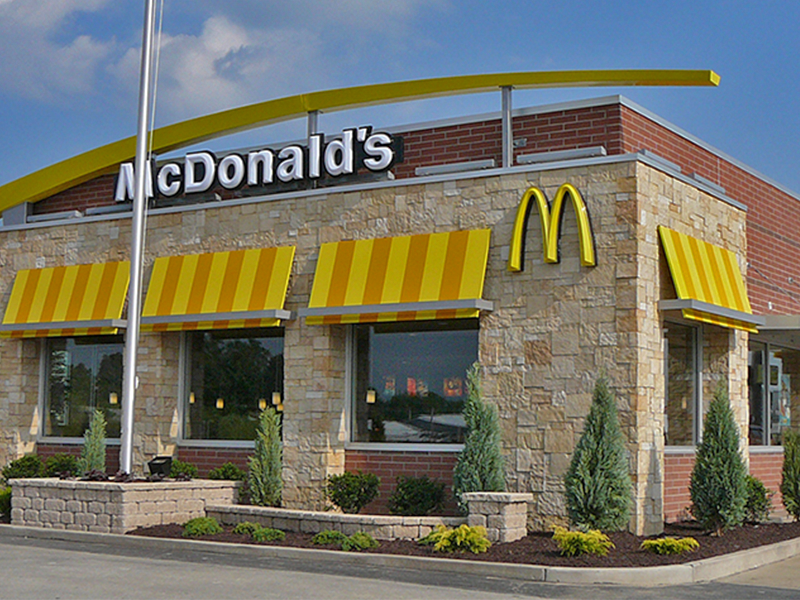
Even in NNN investing, location matters — particularly for post-lease re-use value. A McDonald's on a high-traffic urban corner will trade at a lower cap rate than a McDonald's in a rural market with limited alternative tenants, even if both leases are identical.
4. Rent Escalation Schedule
NNN leases with periodic rent bumps — typically 5–10% every 5 years — are more valuable than flat leases. Properties with rent escalations built in trade at compressed cap rates because the income stream grows over time, partially offsetting inflation.
5. Interest Rate Environment
NNN cap rates are correlated with the broader interest rate environment. As 10-year Treasury yields rise, NNN cap rates tend to follow — investors require more yield relative to risk-free alternatives. During periods of low rates, cap rates compress; during rising rate environments, they expand (prices fall).
NNN Cap Rates by Tenant Category
| Tenant Category | Examples | Typical Cap Rate Range | S&P Rating |
|---|---|---|---|
| Big Box Retail | Walmart, Home Depot, Lowe's, Target | 4.25%–5.25% | A / AA |
| Fast Food / QSR | McDonald's, Chick-fil-A, Starbucks | 4.5%–5.5% | BBB+ / A |
| Pharmacy | CVS, Walgreens | 5.0%–6.5% | BBB / BB+ |
| Dollar Store | Dollar General, Dollar Tree | 5.0%–6.0% | BBB |
| Auto Parts | AutoZone, O'Reilly, Advance Auto | 5.5%–6.5% | BBB |
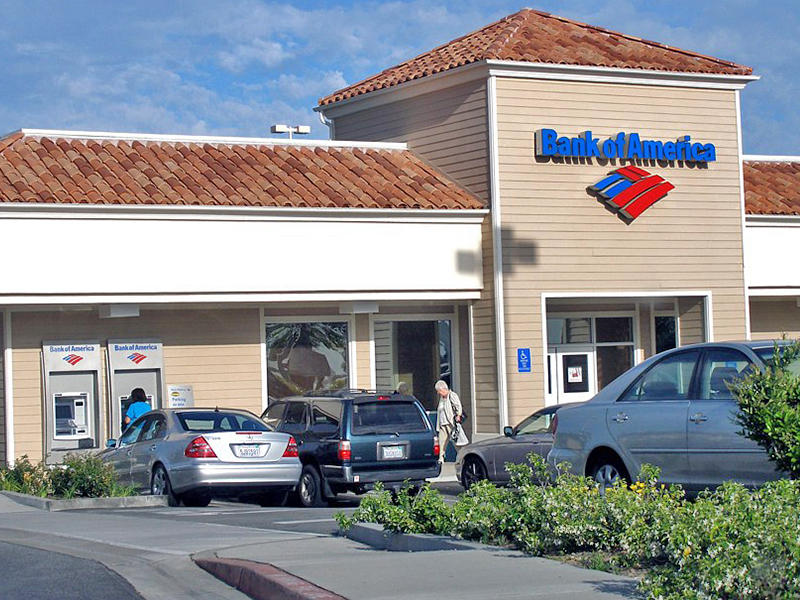
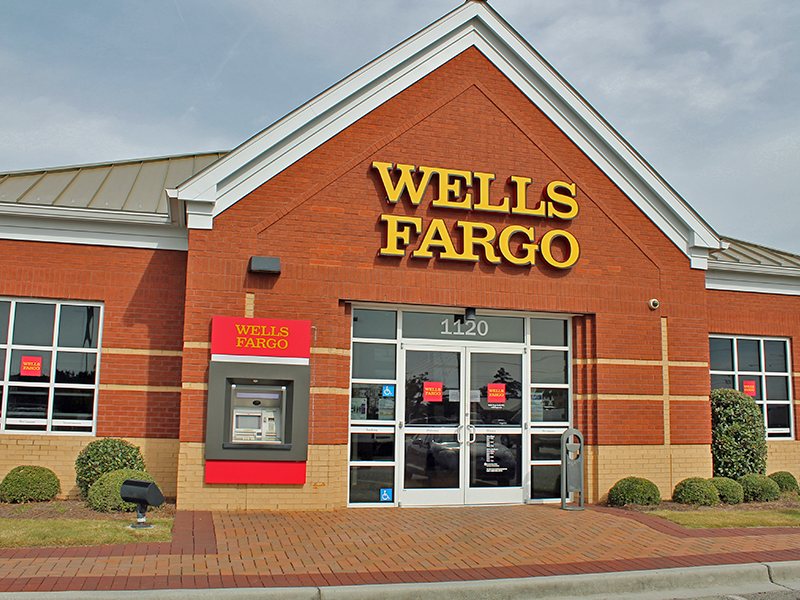
| Bank / Financial | Chase, Wells Fargo, Bank of America | 5.0%–6.25% | A / A+ |
| Casual Dining | Olive Garden, Applebee's, Denny's | 5.75%–7.5% | BB / B |
| Regional / Non-Rated | Local franchisees, regional chains | 6.5%–8%+ | Unrated |
Cap Rate Calculation Examples
McDonald's — $3M Purchase
Dollar General — $1.6M Purchase
Cap Rate Compression vs. Expansion
Cap rate compression occurs when cap rates fall — meaning prices rise relative to income. Compression benefits existing owners (your property appreciates) and challenges buyers (you pay more for the same rent). Cap rate compression typically occurs during periods of strong investor demand, low interest rates, or improved tenant credit perceptions.
Cap rate expansion is the opposite — cap rates rise, prices fall. Expansion can hurt existing owners seeking to sell but creates buying opportunities for investors with available capital. Rising interest rates, economic uncertainty, or deteriorating tenant credit can cause cap rate expansion.
The buyer's perspective: Buying at a 5.5% cap rate when market rates are 5.5% is fair value. If rates later compress to 5.0%, your $3,000,000 property is now worth $3,300,000 — a 10% appreciation from cap rate compression alone, in addition to the rent income you collected throughout.
Cap Rate vs. Cash-on-Cash Return
New investors sometimes confuse cap rate with cash-on-cash return. They are related but different:
- Cap rate is calculated on the full property value, ignoring financing. It is a property metric, not an investor metric.
- Cash-on-cash return measures your actual cash income relative to your cash invested (equity), accounting for mortgage payments.
Example: A $3,000,000 NNN property at a 5.5% cap rate generates $165,000 in annual income. If you put 35% down ($1,050,000) and finance $1,950,000 at 6.5% interest, your annual debt service might be $130,000, leaving $35,000 in annual cash flow. That is a cash-on-cash return of approximately 3.3% on your equity — lower than the cap rate because the cost of debt exceeds the cap rate.
This is why many NNN investors purchase with significant equity or all-cash — particularly via 1031 exchange — to avoid negative leverage in the current rate environment.
Ready to evaluate specific NNN properties and their cap rates? Contact Only NNN Properties for a current list of NNN investment opportunities nationwide, complete with cap rate, lease term, tenant, and location details.