Few wealth transfer strategies are as elegant — or as overlooked — as using NNN triple net properties in estate planning. The combination of long lease terms, zero management obligations, predictable income, and flexible LLC structuring makes NNN properties uniquely suited to building and passing on generational wealth without burdening your heirs with operational complexity.
Whether you are approaching retirement, planning for the next generation, or working with an estate attorney to optimize your holdings, understanding how NNN properties integrate into an estate plan is essential reading for any serious real estate investor.
The Core Estate Planning Advantage
Most real estate passed to heirs creates a problem: the heirs must either manage it themselves, hire professional management, or sell it. Apartment buildings require property managers. Commercial strip centers need leasing agents, tenant negotiations, and ongoing capital investment. Heirs who are doctors, attorneys, or business professionals rarely want a second career managing investment real estate.
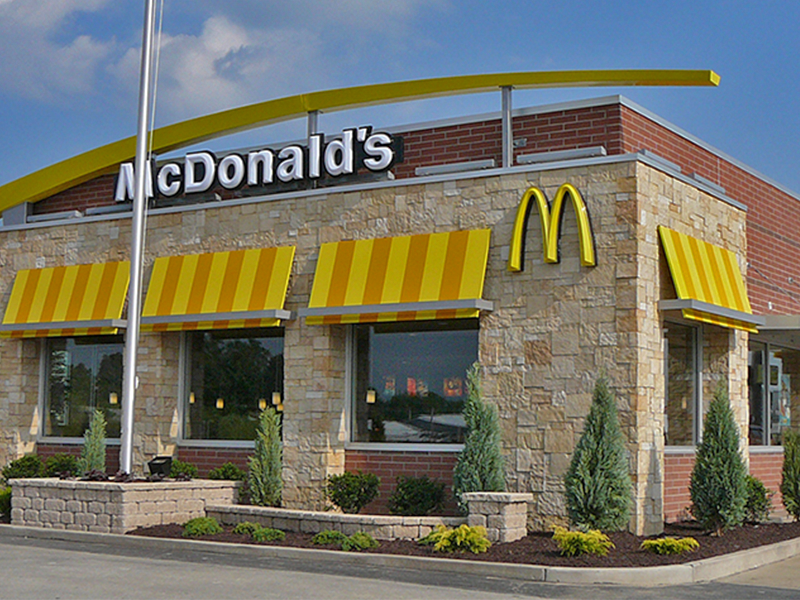
NNN properties solve this entirely. Because the tenant — a corporation like Lowe's, McDonald's, or Dollar General — is contractually responsible for all taxes, insurance, and maintenance, your heirs receive income without obligation. The property functions as a long-term, self-managing income asset that requires no expertise to inherit.
The NNN estate strategy in one sentence: Exchange one large, management-intensive property into multiple NNN properties, place each in a separate LLC, and designate each LLC to a different heir — creating clean, equal, self-managing income estates.
The 1031 Exchange + NNN Estate Strategy
The most powerful estate planning application of NNN properties begins with a 1031 like-kind exchange. Investors who have built significant equity in an apartment building, office property, or strip center can exchange that single asset — tax-deferred — into multiple NNN properties simultaneously.
ⓘ Real-World Scenario
An investor owns a $4,500,000 apartment building with a $2,200,000 cost basis. Selling outright would trigger approximately $450,000 in federal capital gains taxes.
Instead, the investor executes a 1031 exchange into three NNN properties:
Property 1 — Walgreens, Florida: $1,500,000 | 15-year lease | $75,000/year
Property 2 — McDonald's, Texas: $1,500,000 | 20-year lease | $82,500/year
Property 3 — Dollar General, Tennessee: $1,500,000 | 12-year lease | $90,000/year
Each property goes into its own LLC. Each LLC is designated to one of three children in the estate plan. Zero capital gains taxes are paid. Each child inherits a self-managing, income-producing asset with no management obligations.
Structuring NNN Properties in Your Estate
Single-Member LLCs for Each Property
The standard structure is to hold each NNN property in its own single-member LLC. This provides liability protection, pass-through tax treatment, and — critically for estate planning — a clean unit of ownership that can be transferred, gifted, or bequeathed independently of other properties.
Each LLC can be owned by a trust, held directly, or gradually transferred to heirs through annual gift tax exclusions ($18,000 per recipient as of 2024, adjusted periodically). Your estate attorney can structure the transfer timeline to minimize or eliminate estate tax exposure.
Revocable Living Trust as the Owner
Many NNN estate plans place each LLC inside a revocable living trust. During your lifetime, you retain full control of all assets. Upon death, assets transfer directly to beneficiaries without probate — the single most expensive and time-consuming element of estate administration.
Because NNN properties have long, stable leases with corporate tenants, they do not require immediate attention at the time of inheritance. Your heirs can take months to engage with attorneys, CPAs, and advisors without the property deteriorating or income being interrupted.
Tenants-in-Common (TIC) for Undivided Interests
When properties cannot be divided equally among heirs by count, Tenants-in-Common structures allow fractional ownership. Two heirs might each own 50% of a single NNN property, or one heir might own 70% and another 30% — proportional to their intended inheritance share — all while the property continues operating identically.
Step-Up in Basis: The Ultimate NNN Tax Benefit
One of the most significant — and underappreciated — benefits of holding NNN properties until death is the step-up in basis. Under current U.S. tax law, when a property is inherited, the heir's cost basis is "stepped up" to the fair market value at the date of death, eliminating all accumulated capital gains from the decedent's ownership period.
An investor who purchased a NNN property for $1,200,000 and holds it until it appreciates to $2,000,000 has accumulated $800,000 in unrealized capital gains. If the investor sells before death, those gains are taxable. If the investor holds until death and passes the property to an heir, the heir inherits with a $2,000,000 basis — and can sell immediately with zero capital gains tax owed on the inherited appreciation.
Combined with 1031 exchange deferral during life and step-up in basis at death, a properly structured NNN estate plan can result in a family paying no capital gains taxes across an entire investing lifetime.
Charitable Giving with NNN Properties
NNN properties are also powerful vehicles for charitable estate planning. A Charitable Remainder Trust (CRT) can receive a NNN property, sell it without capital gains, reinvest the proceeds for income, pay you an annuity during your lifetime, and transfer the remainder to a designated charity at death — all while generating a charitable deduction in the year of contribution.
Building Your NNN Estate Plan: Steps to Take Now
- Inventory your current real estate. Identify properties with significant equity and high management burden — these are prime 1031 exchange candidates.
- Engage an estate attorney and CPA. NNN estate planning requires coordination between real estate strategy, tax planning, and estate law. Build your advisory team before executing any transactions.
- Identify your NNN replacement properties. Contact Only NNN Properties to receive a nationwide inventory matched to your exchange equity and investment criteria.
- Structure your LLCs and trusts. Work with your attorney to establish the ownership entities before closing on replacement properties — the structure should be in place before title transfers.
- Document your estate designations. Update your trust, will, and beneficiary designations to reflect the new NNN property holdings and your intended distribution to heirs.
NNN properties are not just an investment vehicle — they are one of the most powerful estate tools available to real estate investors. Contact Only NNN Properties to begin identifying the NNN properties that will form the foundation of your family's financial legacy.